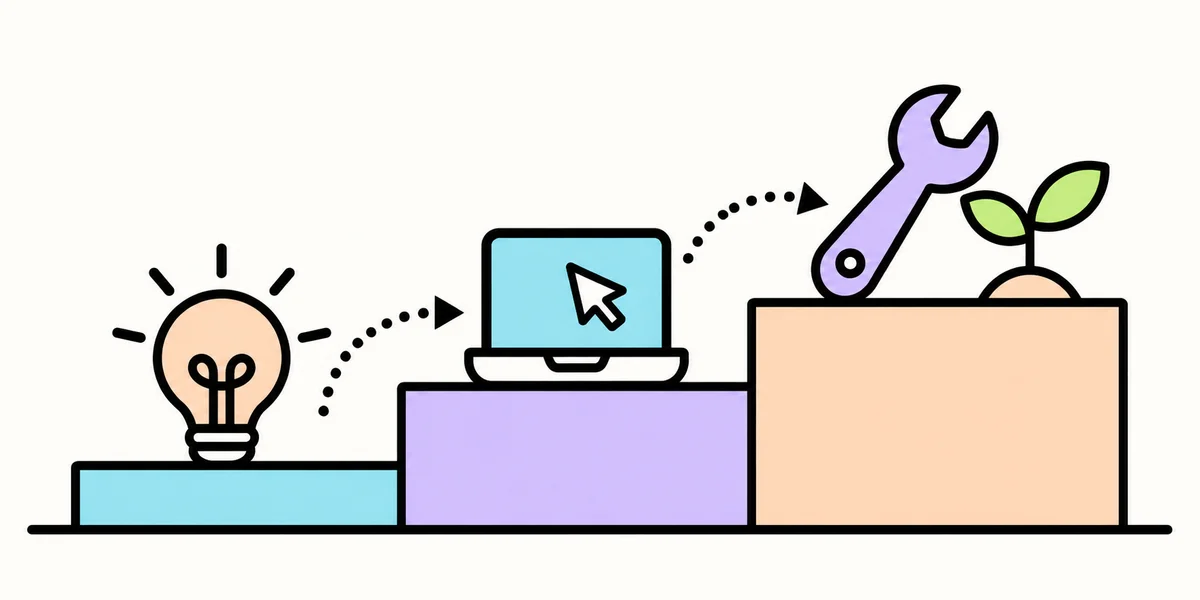
The three stages of AI progress
AI that understands information, AI that uses a computer on its own, and robots: what each stage adds, and why they are stages, not dates.
Edited · 10 min read
A better question
Most talk about artificial intelligence and work comes down to one question: Which jobs will AI replace?
A more useful question about the future is:
How will artificial intelligence change the work that people actually do in different occupations?
Take an accountant, a nurse, a farmer and an electrician. Today, these people work in very different places and do very different tasks. But all four could benefit from artificial intelligence.
Just not necessarily in the same ways.
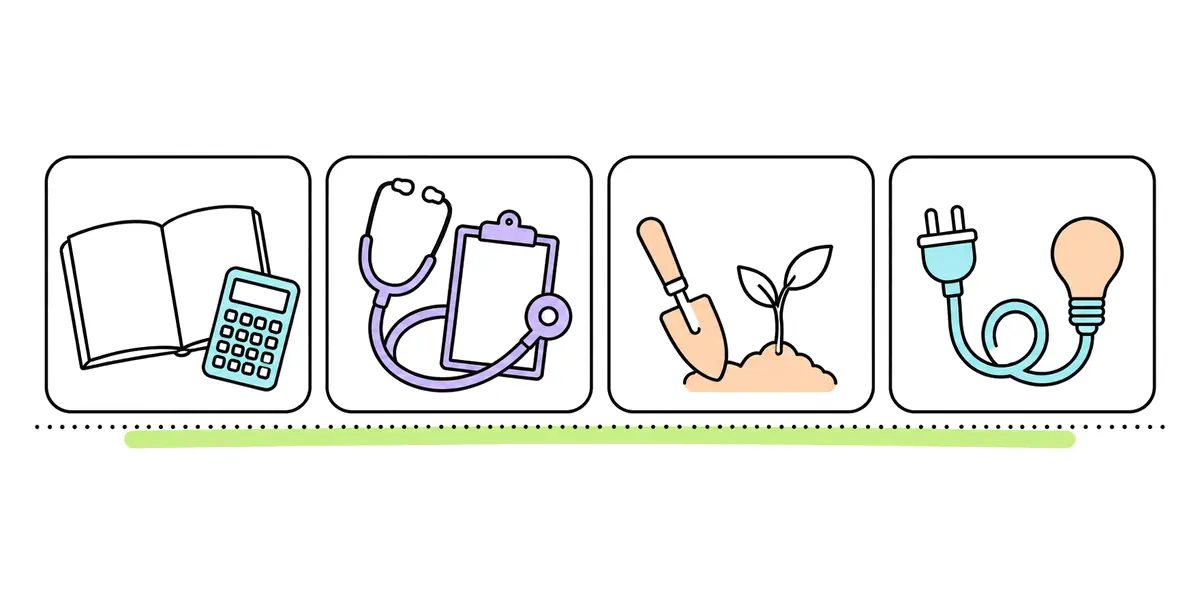
The accountant might benefit a lot from an AI that can run accounting software on its own. The nurse might benefit from automated documentation and patient monitoring. The farmer might benefit from robots that can recognize and harvest individual crops.
The electrician might benefit from an AI assistant that understands electrical diagrams, looks at installations through cameras, and later even does some of the physical work. These changes won't necessarily happen at the same time. AI is moving from understanding information, to acting in digital spaces, and then to more and more general physical abilities.
This post covers three stages of AI capability:
- Cognitive intelligence: AI's ability to understand, analyze, and create information.
- Digital agency: AI's ability to run software on its own and carry out complex digital workflows.
- Physical agency: AI's ability to act in the physical world with more and more human-like speed, dexterity, and adaptability.
The aim here is not to predict unemployment, to argue whether humans will still be needed, or to guess exactly when each stage will arrive. Instead, it looks at how work itself might change, and where productivity gains might come from.
1. Three Stages of Artificial Intelligence
The three stages here are based on capabilities. Not dates. They're cumulative.
The second stage builds on the first. The third builds on the capabilities of both the first and the second.
Added by Stage 1Added by Stage 2Added by Stage 3
And they're not strictly separate. Computer-using AI agents and specialized autonomous robots already exist in 2026. What changes between stages is how reliable, adaptable, autonomous, and useful in practice they are.
Stage 1: Cognitive Intelligence
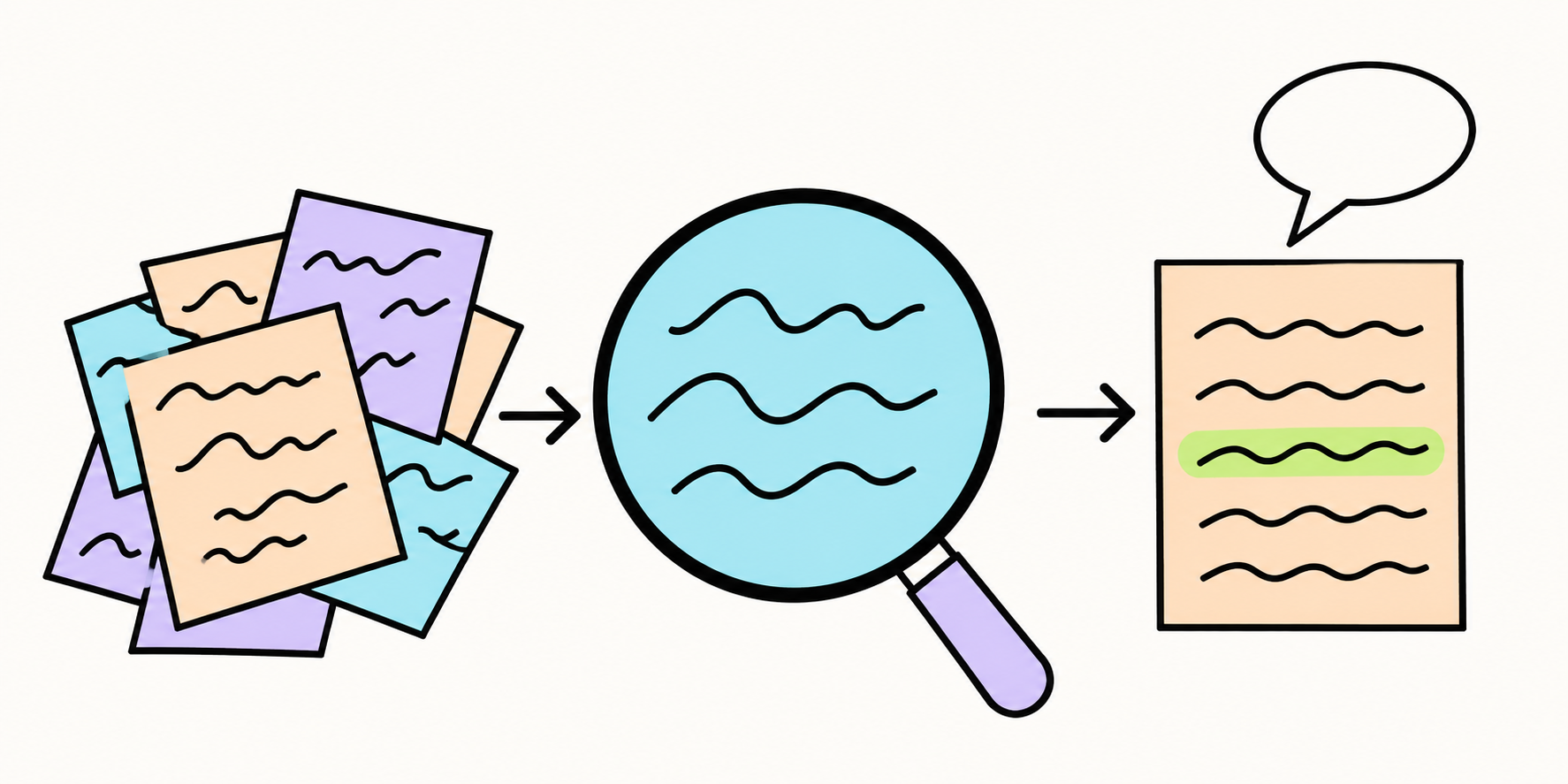
From information processing to intelligent assistance.
In the first stage, we're looking at systems that can understand and create text, images, speech, code, and other information. These systems can:
- Summarize documents and conversations.
- Analyze data sets and spot patterns.
- Understand photographs and diagrams.
- Create reports, software, and teaching material.
- Help with research, planning, and decision-making.
The main interaction is still a conversation or a document. A person usually provides information, gets a result back, and then decides what to do next.
Example: An accountant
The accountant uploads financial records and asks the AI to find discrepancies. The AI goes through the information. Then it recommends how to fix them.
The accountant is still switching between apps, looking for missing documents, entering data, and carrying out the workflow. The big productivity gain is in cutting the effort needed to process and understand information.
Stage 2: Digital Agency
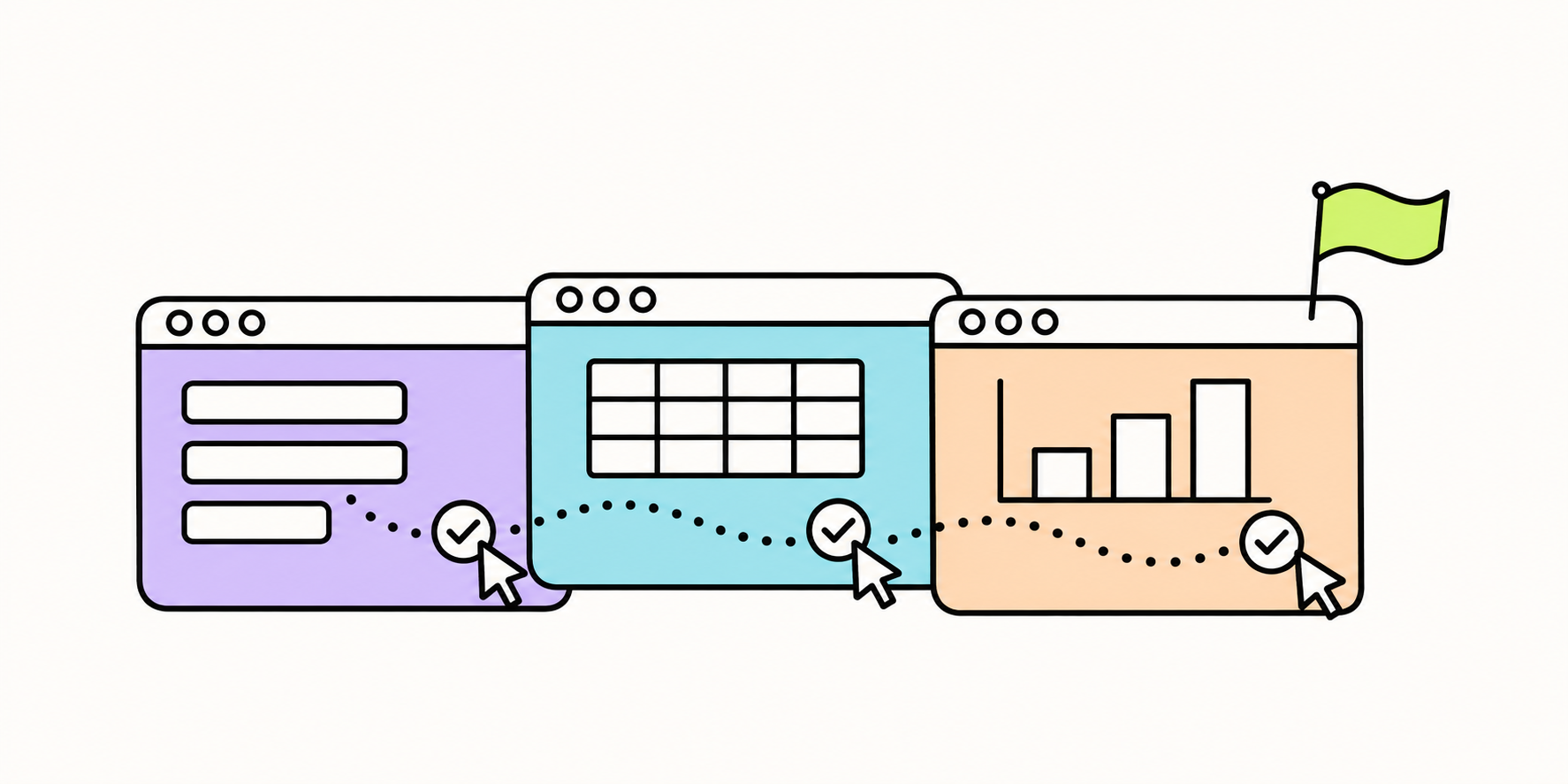
From answering questions to doing work.
The second stage starts when AI can reliably work in digital spaces. So AI doesn't just tell a professional what to do. It takes a series of actions across applications.
These systems would be able to:
- Work across websites and desktop applications.
- Read, edit, and reconcile records.
- Communicate across authorized business systems.
- Manage multi-step processes.
- Watch for events and respond when things change.
- Check results and pass exceptions up to a person.
This is a big shift. A traditional AI assistant helps someone use software. An autonomous digital agent uses the software itself.
Example: The same accountant
The accountant gives the agent the task of preparing the monthly financial close. The agent fetches transactions, matches invoices, updates the accounting records, looks into discrepancies, prepares reports, and brings the unresolved exceptions to the accountant for review. The accountant's main role is setting goals, handling unusual cases, and approving the final results.
So the productivity gain comes from cutting manual coordination and work inside apps. Not just from writing text faster. In 2026, these capabilities are already advancing quickly.
But it's still hard to get them to complete long, complex workflows reliably. Stanford's 2026 AI Index reported that leading agents reached about 66% success on the original OSWorld computer-use benchmark. The newer OSWorld 2.0 benchmark shows that long-horizon workflows are much harder.
Stage 3: Physical Agency
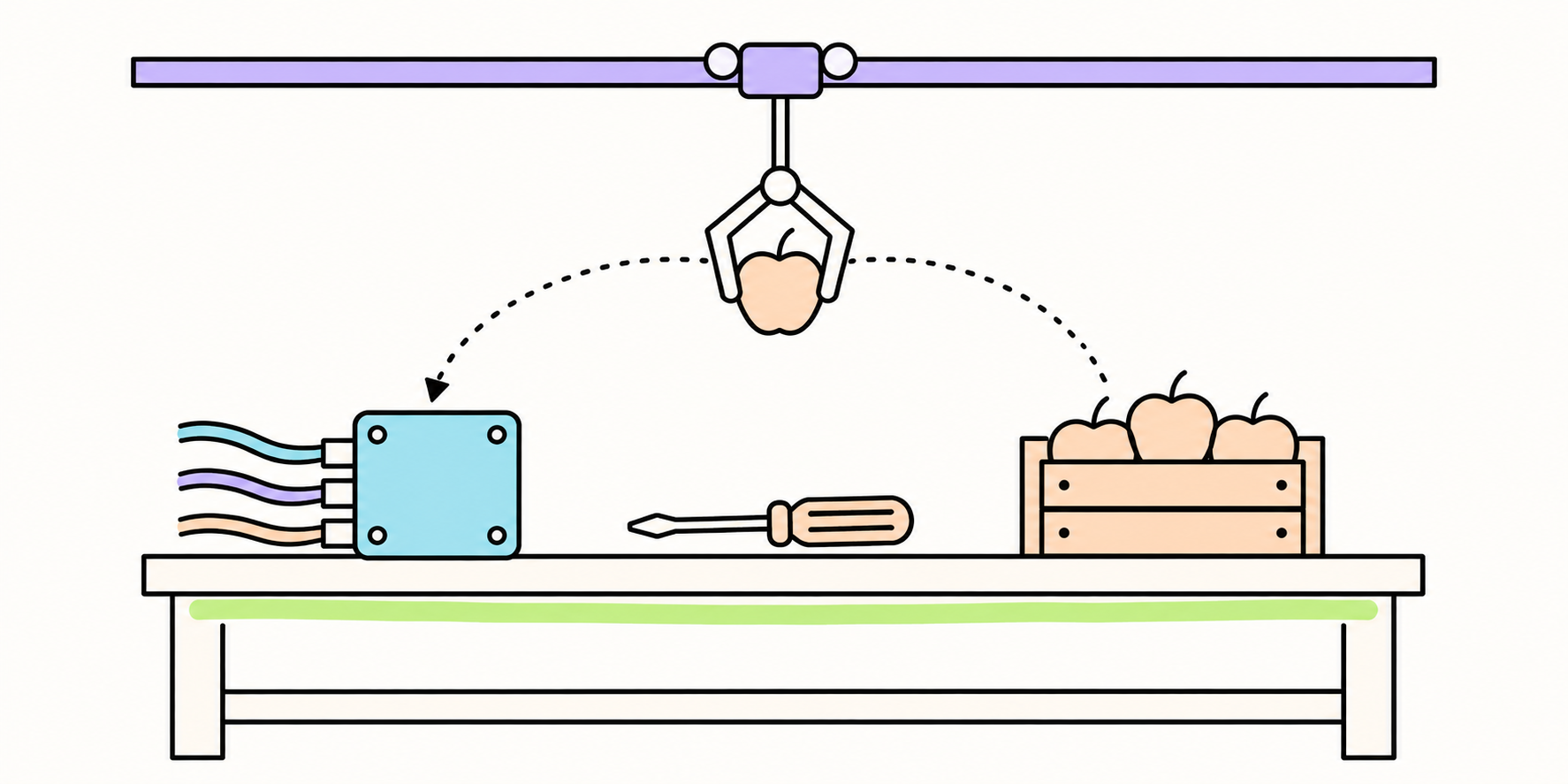
From running software to working in the physical world.
The third stage is about AI systems that can take physical action, with advanced perception, motor control, and the ability to adapt in real time. This could show up in humanoid robots, specialized industrial machines, autonomous vehicles, agricultural robots, medical devices, and other physical systems. And physical agency doesn't have to mean humanoid robots.
On a farm, a specialized harvesting machine might be more useful than a humanoid robot. Stage 3 is about the ability to:
- Handle many different objects.
- Move through changing environments.
- Coordinate perception and movement in real time.
- Recover from unexpected physical situations.
- Work safely around people.
- Go beyond narrowly scripted actions.
Example: The accountant
Once Stage 2 has automated most digital workflows, physical agency might add fairly little to accounting. A robot could handle paper documents, archive material, or help with physical inventory audits. But the main information-processing bottlenecks of the job may already be gone.
For an electrician, though, Stage 3 could make a big difference. An AI-powered robot might inspect wiring, handle tools, help with installations, and test equipment, all under proper safety controls. So the effect depends on the physical side of each occupation.
Industrial robotics already matters a lot economically. The International Federation of Robotics reported about 603,000 industrial robot installations worldwide in 2025, which brought the number of robots in operation above five million.
But general-purpose robots are still far from reliably matching human adaptability in unstructured environments. It's not just about an AI model that understands which physical task to do. It also has to do that task reliably, affordably, and safely.
Sources: Stanford AI Index 2026, OSWorld 2.0, and International Federation of Robotics.
2. What It Means to Get More Done
People often talk about AI productivity as if it were one single percentage. But different occupations produce very different things. A customer support representative solves customer problems. A nurse provides care. A truck driver moves goods. A farmer grows crops. A construction worker finishes physical installations.
To measure productivity, we need to know which output matters. Here, productivity has four parts.
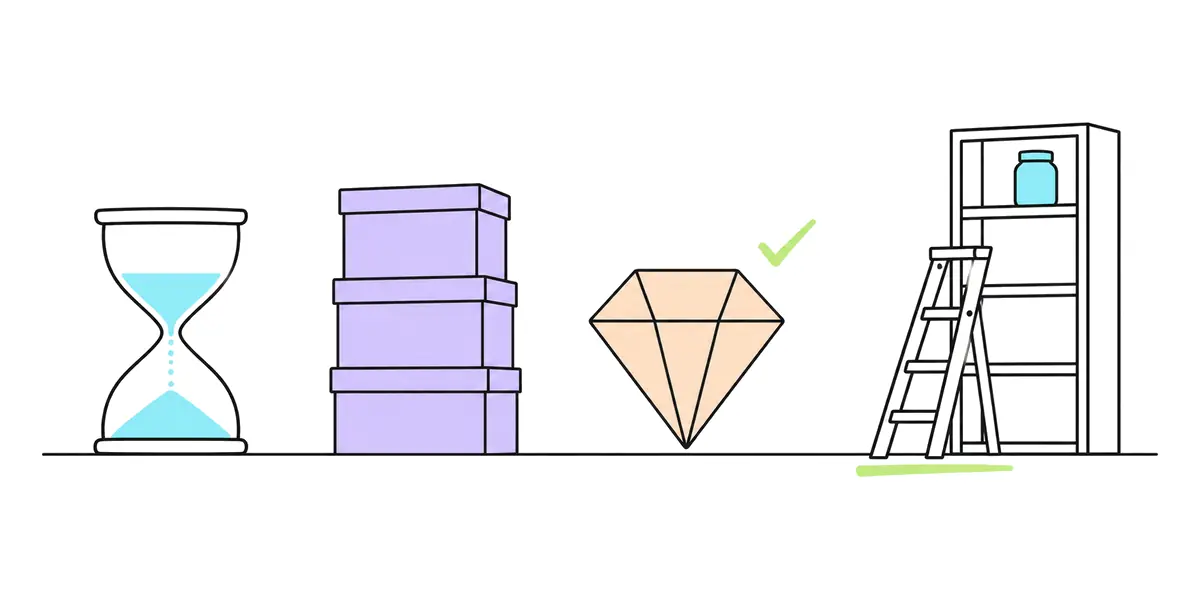
1. Task efficiency
How much less time does a worker need for a specific task?
2. Output capacity
How much more work can be done in a given time without losing quality?
3. Output quality
Can the worker cut errors, be more precise, or get better results with the same resources?
4. Expanded capabilities
Can the worker now do things that used to be too difficult, too costly, or too time-consuming?
These parts are connected, but not interchangeable. Say an occupation takes 8 hours each day:
- 2 hours of documentation.
- 2 hours of gathering information.
- 3 hours of physical work.
- 1 hour of communication and coordination.
Now say Stage 1 AI cuts the time spent on documentation and research in half. The worker saves 2 hours. That's 25% of the original work day.
But that doesn't automatically mean 25% more output. The remaining physical work, customer demand, equipment, and coordination may still limit production. If the worker can put the saved time into productive work without creating a new bottleneck, the same 8 hours could produce more.
In the ideal case, cutting an 8-hour workload to 6 hours would allow about 33% more equivalent tasks per hour.
DocumentationGathering informationPhysical workCommunication and coordination
But real conditions rarely meet every assumption that conversion needs.
What studies have measured
There's already good evidence that AI affects productivity. But the effect varies with the task and the context.
| Study | Measured finding |
|---|---|
| Customer support, published 2025 | AI assistance raised issues resolved per hour by about 15% on average, across more than 5,000 agents. |
| Experienced open-source developers, 2025 | In one randomized study, developers using AI tools took about 19% longer to finish selected real software tasks. |
| Physicians, 2026 | A multi-site observational study linked the use of AI scribes to about 16 fewer documentation minutes per 8 scheduled patient hours, and a small increase in weekly patient visits. |
| University physics education, 2025 | A randomized experiment found that students using a custom-built AI tutor learned more in less time than students in the comparison active-learning class. |
Sources: Brynjolfsson, Li and Raymond, Generative AI at Work, METR Developer Productivity Study, JAMA AI-Scribe Study, and AI Tutoring Randomized Trial.
These studies show why broad claims about AI productivity are hard to defend. A technology that speeds up one thing can add review, correction, or integration work somewhere else. So this post looks at the ways productivity could improve, and doesn't make unsupported numerical growth forecasts.
3. Why These Are Stages, Not Dates
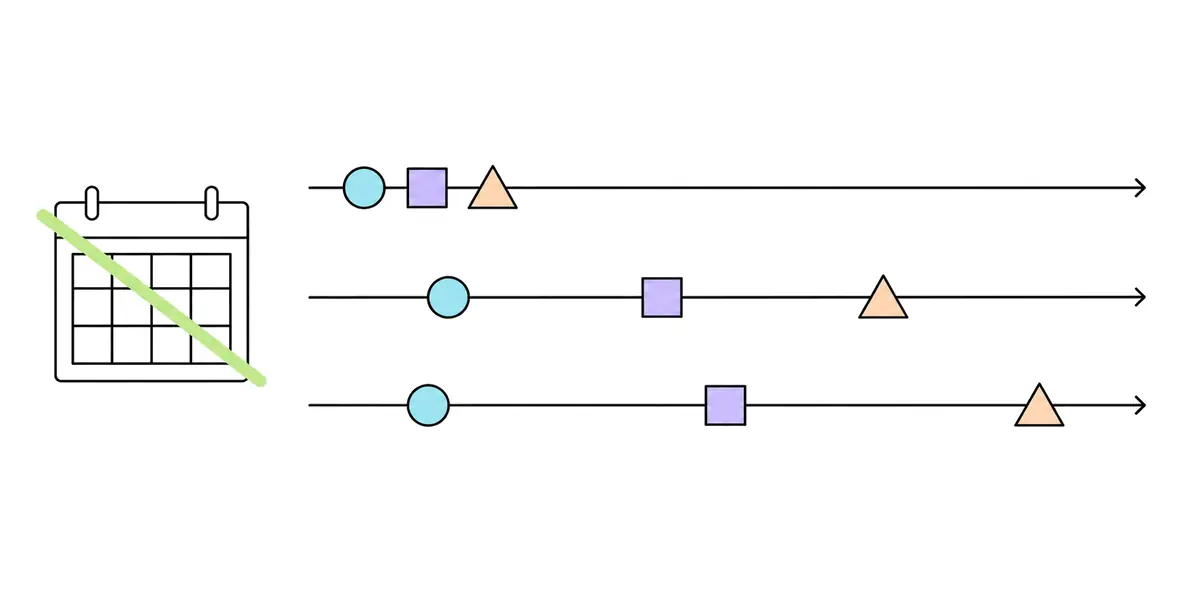
It's tempting to give each of the three stages a specific year. For example, you might think cognitive AI is the present, digital agency comes a few years later, and physical agency comes after that. But technology rarely moves in such clean steps.
Some narrow digital agents already do useful work. Some factories have used industrial robots for decades. Autonomous vehicles already carry passengers in some places.
At the same time, AI still struggles with some computer tasks that look simple, and general-purpose robots still do badly at many tasks in homes they don't know. The Stanford 2026 AI Index reported only about 12% success on a benchmark of real-world household robot tasks, even though robots do much better on some controlled manipulation benchmarks.
So it makes sense to read the stages as thresholds of practical capability.
Stage 1 is mature enough to give useful cognitive help in many areas.
Stage 2 already exists in part, but reliable long-horizon agents that work across any professional software are still an engineering challenge.
Stage 3 already exists in specialized settings, but flexible physical agency that can compete on cost is still much more limited.
Progress could be uneven. One industry might get very capable physical automation before another one has reliable digital agents. So this post is about what becomes possible when each capability is available. It doesn't claim that every industry will move on the same schedule.
One stage at a time
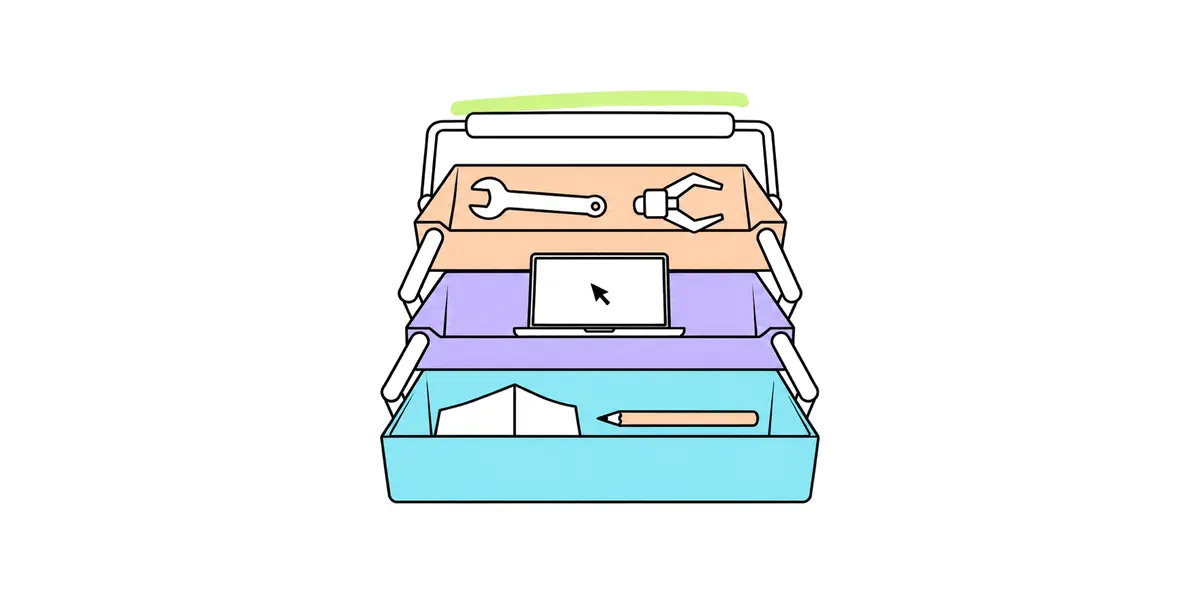
People often describe AI as a race toward more and more powerful models. But intelligence alone doesn't tell us how work will change. What happens in practice depends on what those models can do with their capabilities.
The first big change is the ability to understand and produce information. The second is the ability to act on its own across digital systems. The third is the ability to work reliably and flexibly in the physical world.
Each stage adds to the tasks that AI can help with. But the effect differs a lot from one occupation to another. For some professions, the most important change may be cognitive assistance.
For others, digital agency. For others, physical robots. And for many, all three working together.
So the result won't necessarily be the same rise in productivity across the whole economy. Different occupations will meet different technological opportunities, adoption limits, and production bottlenecks.
The most useful way to understand AI's effect on work is not to ask whether an occupation can be automated. It's to look at the tasks that make up the occupation, the capabilities those tasks need, and the limits that decide how much doing them is worth.
Seen this way, AI stops being an abstract technological force and becomes something much more concrete: a changing set of capabilities that can change how people actually do their work.
Sources
Digital and physical AI capabilities
- Stanford University — AI Index Report 2026.
- OSWorld 2.0 — Benchmarking Computer-Use Agents on Long-Horizon Real-World Tasks (2026).
- International Federation of Robotics — World Robotics.
Observed productivity effects
- Brynjolfsson, Li, and Raymond — Generative AI at Work (2025).
- METR — Measuring the Impact of Early-2025 AI on Experienced Open-Source Developer Productivity.
- JAMA — Changes in Clinician Time Expenditure and Visit Quantity With AI Scribes (2026).
- Scientific Reports — AI Tutoring Outperforms In-Class Active Learning (2025).
Methodological disclosure: The source publications provide measured statistics, technology evaluations, and some experimental productivity results. The three-stage framework is my own synthesis.