What Comes After AI Can Do Everything
When machines can do the work, the work that's left is deciding what it's for.
· 6 min read
Where this starts
In How Artificial Intelligence Will Transform 100 Occupations, I split AI into three stages and went job by job to look at what each stage changes. First AI that thinks. Then AI that works a computer on its own. Then AI that works in the physical world.
Those posts stop at stage three. This one asks the next question.
Say all three stages are done. AI can think. It can use any software. Robots can do almost any physical task. Then what do people do?
My short answer: we stop doing the work by hand, and we start aligning it. We guide. We add taste. We set the values. Making sure what the machines do matches what people actually need becomes the main work of the economy.
"Everything" here is a thought experiment, not a forecast. Like the stages post, this one is about stages, not dates.
I already work like this
This is not only a guess. It's how I build software today.
I build my apps with AI agents. I don't write most of the code anymore. I say what I want, at a high level. I look at what comes back. Then I say things like "simpler", "this name is confusing", "this should feel like the other page", "no, that's the wrong idea". The agents do the typing, the testing and the fixing.
My job is the direction and the taste.
It's still work. Some days it's hard work. But it's a different kind of work. I spend my time on what the thing should be and whether it's good. Not on how each line is written.
Writing code by handGuiding, reviewing and deciding
Factories with no hands
Take a factory. Today people still run machines, move parts, check quality. A lot is already automated, but people fill the gaps.
Now picture a factory where nothing is manual. Robots build. Robots fix the robots. Software plans the whole line.
What are the people there for?
They make sure the whole process serves people. What do we make? For whom? How safe, how long it lasts, how cheap, how it treats the town around it. Those aren't technical questions. They're questions about what people need and what they care about. The machines can't answer them alone, because the answer depends on us.
Drivers
Driving is the clearest example to me.
Today millions of people drive for a living. It's manual work. Hands on the wheel, eyes on the road, all day.
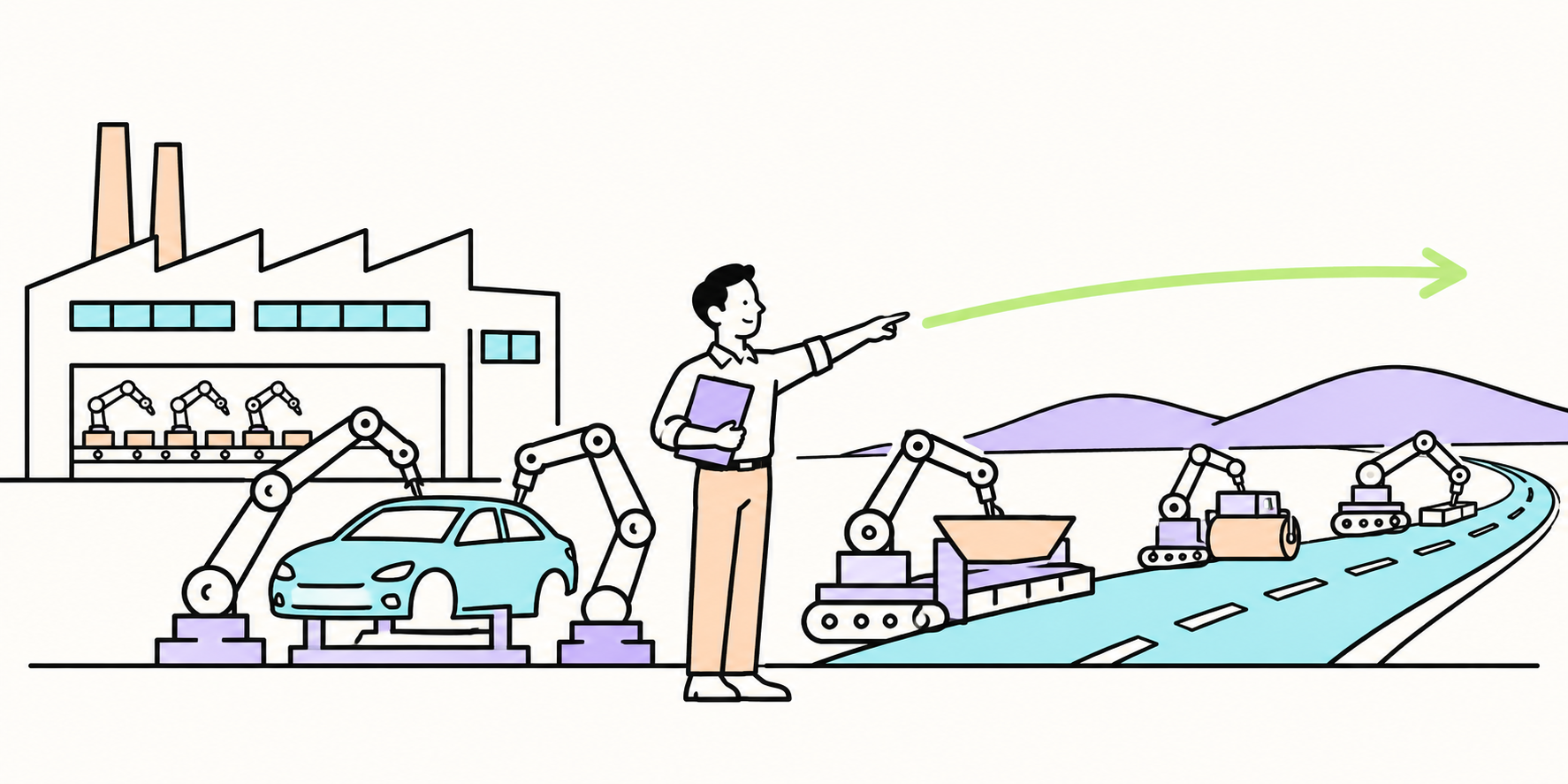
Later, cars drive themselves. Later still, robots build and fix the roads too. Nobody holds a wheel.
But someone still decides what the trip should be. Faster or more comfortable. Who gets priority in a city. Where roads go and what they cut through. How it feels to ride, for a kid, for an old person, for someone in a hurry. People shape the experience at a very high level, and the machines do the rest.
Doing the taskGuiding and supervising
Every industry, the same shape
The pattern repeats everywhere.
- Health: AI finds the problem, robots do the procedure. People decide what good care means and who comes first.
- Farming: robots plant and harvest. People decide what we grow and how we treat the land.
- Teaching: AI can explain anything to anyone. People decide what's worth learning, and why.
- Software: agents write and test. People decide what to build and whether it's good.
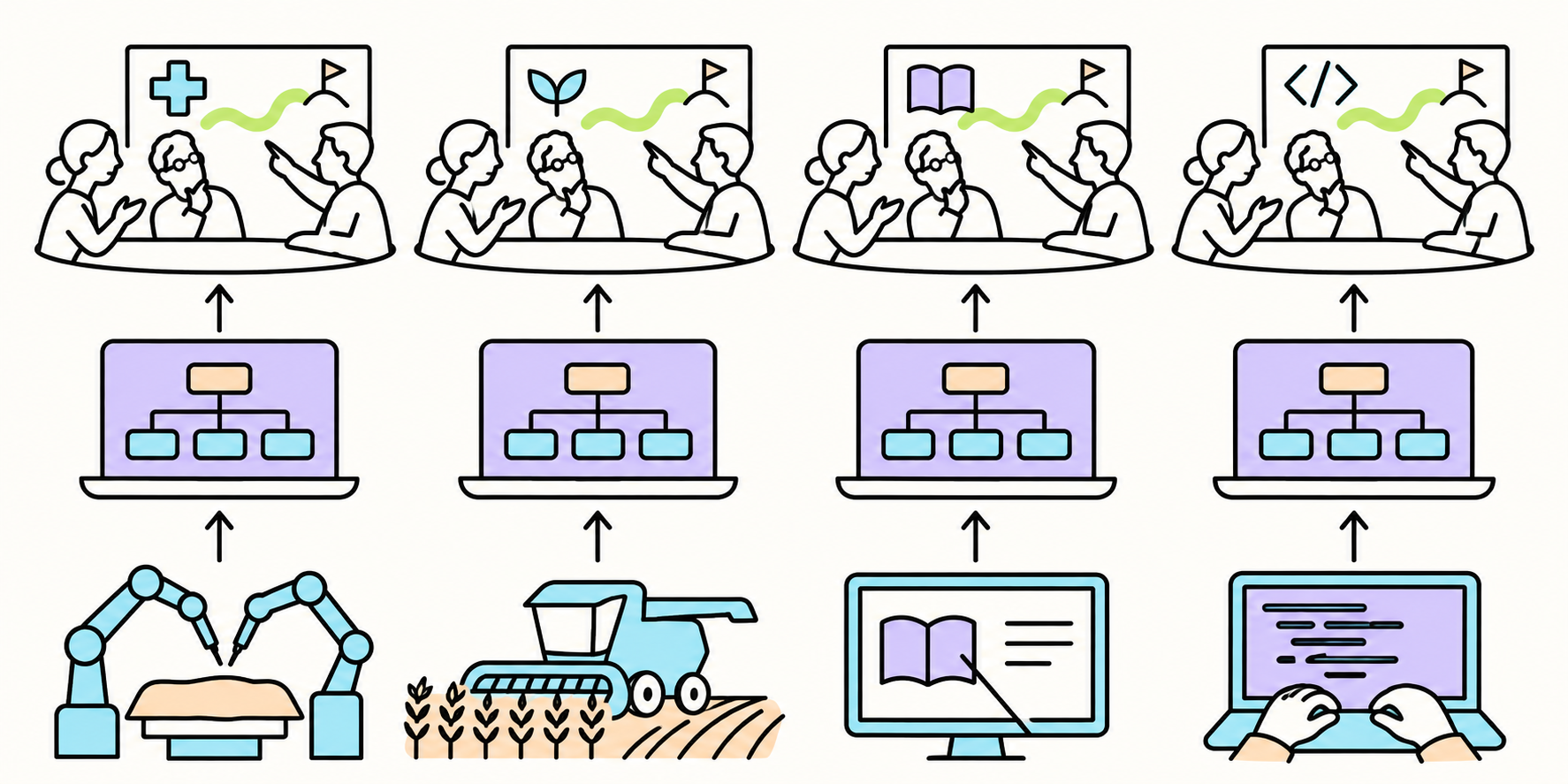
The doing goes to machines. Deciding what's worth doing stays with us.
Alignment becomes the economy
In AI, "alignment" means making a system do what people actually want, not only what they literally said. Today it's a research field.
I think it becomes most of the economy.
When doing is cheap, the hard part is knowing what to do. And knowing what to do means knowing what people need. That's not one answer. Different people want different things. They change their minds. They want things they can't describe until they see them.
So work turns into a loop. Machines propose. People react. Machines adjust. Taste, feedback, values, over and over, at every level, from one app to a whole city.
People connect with people
If that's right, a big part of what people do becomes talking to each other.
To align a system with what people need, you have to know what they need. You find out by spending time with them. Listening. Arguing. Agreeing on what matters.
So social connection stops being a side thing. It becomes the core skill. Aligning values across a family, a company, a country is slow work, and it's human work. Maybe the most human work there is.
Doing the taskGuiding and decidingTime with other people
Open questions
I don't have answers here. These are the parts I keep coming back to.
- People who don't want to supervise. Not everyone wants to guide machines or argue about values. Some people like doing things with their hands.
- Who decides the values? If alignment is the work, whoever sets the values has a lot of power. One company? A government? Everyone?
- Inequality. The people who own the machines could end up with almost everything. If only a few get to guide, the rest are left out.
- Meaning. Many people get meaning from their job, from making something with their own effort.
- Can AI learn our taste too? If it can, does it end up guiding itself?
- The way there. The end might be fine and the middle rough. Jobs go before new ones show up.
The part that was always there
Machines will do more and more of the work. I'm fairly sure of that.
What I'm less sure of is whether we'll get good at the part that's left. Knowing what we want. Agreeing on it with each other.
That part was always there. We just had little time for it, because the work took most of the day.
Illustrations generated with AI.